Basics template

Menu
  • Home
  • About Festival
  • Concert
    • 2021
    • 2022
  • Performers
    • Performers 2021
    • Performers 2022
  • Masterclass
    • Masterclass 2021
      • Gábor Eckhardt Piano Masterclass
      • Erzsébet Kőrösiné Belák Piano Masterclass
    • Masterclass 2022
  • Piano Competition
    • 2021
      • Competition material
      • 1st Carpathian Basin International Piano Competition
      • Members of the International Jury
  • Musicology Conference
    • 2021
      • Debrecen - MUSICOLOGY CONFERENCE
      • Debrecen - MUSICOLOGY CONFERENCE - CLOSING CONCERT
  • Photo gallery
    • 2021
      • Budapest - OPENING CONCERT
      • Budapest - HAYDN AND ESZTERHÁZA
      • Debrecen - MUSICOLOGY CONFERENCE - CLOSING CONCERT
      • Subotica - FOCUS ON CHAMBER MUSIC
      • Bratislava - CZECH-SLOVAK PIANO RECITAL
      • Uzhhorod - PIANISTS FROM UZHHOROD RECITAL BY JÓZSEF ÖRMÉNY AND IRÉN SELELJO
      • Cluj - IN BEETHOVEN ’S FOOTSTEPS - BOLDIZSÁR CSÍKY AND THE ACCORD QUARTET
      • Budapest - FRANZ LISZT, MASTER OF THE TRANSCRIPTION
      • Budapest - GAMES WITH BARTÓK
      • Budapest - BUT LET THAT SOURCE BE PURE, FRESH, AND WHOLESOME
      • Miskolc - CLOSING CONCERT
      • ERZSÉBET KŐRÖSINÉ BELÁK PIANO MASTERCLASS
      • Concert given by Vince Vilmos Vajda, winner of the Carpathian Basin Grand Prix
      • Concert of the winners of the 1st Carpatian Basin International Piano Competition
    • Piano competition -Competition material | Video 2021
    • AGE GROUP I.
    • AGE GROUP II.
    • AGE GROUP III.
  • Back to current page

 Archive of the Carpathian Basin Classical Music Festival in 2021   HU   |   EN

Basics template

  • Home
  • About Festival
  • Concert
    • 2021
    • 2022
  • Performers
    • Performers 2021
    • Performers 2022
  • Masterclass
    • Masterclass 2021
      • Gábor Eckhardt Piano Masterclass
      • Erzsébet Kőrösiné Belák Piano Masterclass
    • Masterclass 2022
  • Piano Competition
    • 2021
      • Competition material
      • 1st Carpathian Basin International Piano Competition
      • Members of the International Jury
  • Musicology Conference
    • 2021
      • Debrecen - MUSICOLOGY CONFERENCE
      • Debrecen - MUSICOLOGY CONFERENCE - CLOSING CONCERT
  • Photo gallery
    • 2021
      • Budapest - OPENING CONCERT
      • Budapest - HAYDN AND ESZTERHÁZA
      • Debrecen - MUSICOLOGY CONFERENCE - CLOSING CONCERT
      • Subotica - FOCUS ON CHAMBER MUSIC
      • Bratislava - CZECH-SLOVAK PIANO RECITAL
      • Uzhhorod - PIANISTS FROM UZHHOROD RECITAL BY JÓZSEF ÖRMÉNY AND IRÉN SELELJO
      • Cluj - IN BEETHOVEN ’S FOOTSTEPS - BOLDIZSÁR CSÍKY AND THE ACCORD QUARTET
      • Budapest - FRANZ LISZT, MASTER OF THE TRANSCRIPTION
      • Budapest - GAMES WITH BARTÓK
      • Budapest - BUT LET THAT SOURCE BE PURE, FRESH, AND WHOLESOME
      • Miskolc - CLOSING CONCERT
      • ERZSÉBET KŐRÖSINÉ BELÁK PIANO MASTERCLASS
      • Concert given by Vince Vilmos Vajda, winner of the Carpathian Basin Grand Prix
      • Concert of the winners of the 1st Carpatian Basin International Piano Competition
    • Piano competition -Competition material | Video 2021
    • AGE GROUP I.
    • AGE GROUP II.
    • AGE GROUP III.
  • Back to current page
Previous Next

The Carpathian Basin Classical Music Festival has been created with the intention of forming a tradition. Its aim is to present the diverse musical culture and artistic activity of the peoples living in the Carpathian Basin, to reinforce their collaboration in the field of music, and to discover and support young talents.

It cannot be emphasized enough how noble the force of music is in the community of peoples in the Carpathian Basin, showing the world the hard work and greatness that the composers, performers, musicologists and creative communities born here put into the creation of culture.

It is our belief that music penetrates even those walls that at first seem to be impenetrable, it brings people, communities, and cultures closer to one another, with fertile power it builds and nurtures the unparalleled culture of the Carpathian Basin, it brings traditions resoundingly to life, with overflowing beauty it smooths over misunderstandings, and in place of unrest it brings peace, collaboration, a belief in the eternal Good, and solace.

One special aspect of the festival is that the concerts are on consecutive days but in different cities and towns in the Carpathian Basin: Budapest, Miskolc, Debrecen, Subotica, Bratislava, Uzhhorod, and Cluj-Napoca.

As part of the festival we are holding masterclasses in Bratislava and Subotica, a musicology conference in Debrecen, and we are holding the Carpathian Basin International Piano Competition in Budapest.

The planners and founders of the Carpathian Basin Classical Music Festival are: pianist Apolka Bonnyai and her husband, Dr. István Bajkai, member of parliament.


2021. október 03., vasárnap 11:00


LISZT FERENC, AZ ÁTIRATOK MESTERE- ZENETÖRTÉNETI ELŐADÁSSAL EGYBEKÖTÖTT LISZT FERENC EMLÉKKONCERT
Régi Zeneakadémia - Kamaraterem (1064, Budapest, Vörösmarty utca 35.)

Előadók:
Eckhardt Mária - zenetörténész
Dráfi Kálmán - zongora
Balázs János - zongora


Miskolc CLOSING CONCERT 

Monday 4 October 2021, 19.30

CLOSING CONCERT
House of Arts (3530, Miskolc, Rákóczi Ferenc utca 5.)

Programme:

László Lajtha: In Memoriam Op. 35
Zoltán Kodály: Psalmus Hungaricus Op. 13

-----

Béla Bartók: Concerto Sz. 116

Performed by:
Szabolcs Brickner -
voice
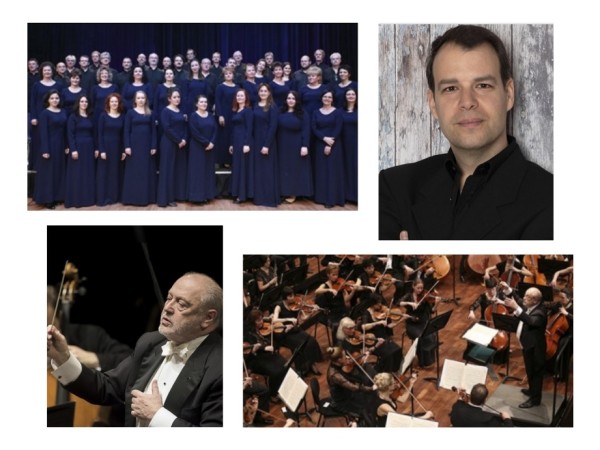
Miskolc Symphony Orchestra
Debrecen Kodály Choir
conducted by: Mátyás Antal

 In the first half of the twentieth century, Béla Bartók, Zoltán Kodály, and László Lajtha (younger by one decade) were known as ‘the three great Hungarians’. All three were outstanding in three fields: they were composers, ethnomusicologists, and respected teachers. In this concert we shall hear one piece by each of them that it closely linked to a Hungarian historical tragedy or turning point: the Trianon peace treaty and the Second World War.
In the oeuvre of László Lajtha there are six compositions that are a direct response to the political decisions preceding the Second World War, and the tragedy of war. One of the reasons for this is that from the age of 22, just as he was beginning his career, this great musician, guided by patriotism, fought for more than four years as an artillery officer and a scout. He was never truly able to overcome the psychological wounds he sustained then, so he was particularly upset to see events repeat themselves barely a few decades later. Designated by Lajtha as a ‘symphonic piece’, In memoriam composed in 1941 is a lament for the victims of the new war, in one, large-scale movement. The year 1941 was also the year in which Hungary’s prime minister Pál Teleki committed suicide; the genesis of this agonizing work might be linked to that. With its deliberately incomplete title, In memoriam commemorates mainly the great mass of the unnamed dead, and was heard in 1942 in London, then in May 1945 János Ferencsik conducted the first post-war premiere.
Kodály’s Psalmus Hungaricusa is one of the most perfect masterpieces of Hungarian music history, and was first performed under the title Psalm 55 at the premiere in 1923, conducted by Ernő Dohnányi. It was written for the 50th anniversary of the unification of the towns of Pest, Buda, and Óbuda into Budapest, the capital, and was scored for tenor solo, choir, and orchestra. Kodály himself found the four-hundred year old psalm paraphrase by Mihály Kecskeméti Végh, with the title ‘Könyörgés hamis atyafiak ellen. Vigasztalódás Istenben’ [Plea against false relatives. Consolation in God]. Written in rondo form with a classically proportioned structure, piece has unparallelled dramatic power and for the Hungarian public three years after the Trianon peace dictate it represented both a statement of the despondency due to the injustice, and opportunity to cling on to faith in God.
Bartók’s five-movement Concerto for Orchestra was written in 1943 to a commission from Serge Koussevitzky, the chief conductor of the Boston Symphony, who premiered the piece at the end of the following year. After many years of silence, this was the first work that Bartók, then very ill, had composed. Of the title for the five-movement work, Bartók himself wrote: ‘The title of this symphony-like orchestral work is explained by the concerto or soloistic treatment of certain instruments or groups of instruments.’The composer gave a title to each movement: Introduzione, Giuoco delle coppie (game of the couples), Elegia , Intermezzo interrotto (interrupted intermezzo – this movement contains the operette melody ‘Szép vagy, gyönyörű vagy, Magyarország’ [Fine and beautiful you are, Hungary], the quoting of this emotional melody is considered to be an expression of Bartók’s homesickness, and lastly: Finale. This last movement conveys an incredible joie de vivre, lust for life, and optimism, and also, as a kind of vast dancing folk celebration, portrays the Bartókian ideal of the brotherhood of peoples at the time of the cataclysm of the Second World War.

Performers

Szabolcs BRICKNER
singer, tenor

Szabolcs BRICKNER singer, tenorAfter graduating in both voice and clarinet at the Franz Liszt Academy in Budapest, Szabolcs BRICKNER attended masterclasses at the Hochschule für Musik in Augsburg with Hans-Joachim Beyer, and Edith Wiens, and took private lessons with Nicolai Gedda, Renata Scotto, Salvatore Fisichella, and Franzisco Araiza. After winning first prizes in national singing competitions, he won the second prize at the 2004 Ferrucio Tagliavini International Singing Competition. In 2008, Szabolcs Brickner was the winner of the first prize (Queen Fabiola Prize) at the Queen Elisabeth Competition in Belgium, one of the world's most prestigious classical music competitions for young performers.

Szabolcs Brickner has sung at the Bayerische Staatsoper, Frankfurt Oper, Nationaltheater Weimar, Nationaltheater Mannheim, the Hungarian State Opera House, Opéra du Rhin in Strasbourg, Gärtnerplatztheater München, and the Volksoper in Vienna.
Szabolcs Brickner works with orchestras such as the Orchestre de Paris, La Monnaie Symphony Orchestra, La Petite Bande, the Orchestra of the Opéra Royal de Wallonie, Danish Radio Sinfonietta, the Orchestre Philharmonique du Luxembourg, the National Orchestra of Belgium, the Orquestra Ciudad de Granada, the Rotterdam Philharmonic Orchestra, the National Philharmonic Orchestra of Hungary, the Budapest Philharmonic


The history of the Hungarian Symphony Orchestra, Miskolc

Miskolci Szimfonikus ZenekarThe Hungarian Symphony Orchestra Miskolc was founded on 1 November 1963 and ever since has been one of the most magnificent cultural institutions in the region – at the same time one of the most prominent performers on the national musical scene.
In May 2014 the Mayor of Miskolc appointed a new managing director of the orchestra, Krisztina Szászné Pónuzs. From 2018 the artistic director of the orchestra has been Mátyás Antal, holder of the Ferenc Liszt, Bartók-Pásztory and Prima prizes,, who has also been the artistic director of the Hungarian National Choir for decades.

The orchestra performs more than eighty concerts in each programme season as part of a subscription series and individual concerts.
The orchestra has two independent season tickets. The Szimfonikus (Symphonic) season ticket includes eight concerts, and the Yamaha season ticket includes three concerts. In addition, they also play for the Filharmónia Magyarország Nonprofit Kft. Season ticket.
The series of youth concerts also plays an important role in the activity of the orchestra. The vast majority of the traditional subscription performances were held at the House of Arts concert hall in Miskolc.

The orchestra often gives guest performances throughout the Hungary, in Budapest, and also on the stage of the more prestigious European concert halls; for example in the Paris Convention Centre, Nottingham, Athens, the Champs-Elysées Theater in Paris, Sisteron in the south of France, and Ravenna in Italy.

In the light of this it can be said that the Hungarian Symphony Orchestra, Miskolc is a growing cultural treasure of the city of Miskolc, and it receives steadily more recognition both in Hungary and abroad.


Kodály Choir Debrecen

Debreceni Kodály Kórus

The Kodály Choir Debrecen is one of Hungary's internationally renowned professional concert choirs. Founded by György Gulyás in 1955, the ensemble has been part of the Kodály Philharmonic Debrecen since 2011. Its extremely broad repertoire, which includes the best of the a cappella and oratorio repertoire, gives a special place to contemporary music, with hundreds of premieres to its name. As a highly acclaimed interpreter of baroque and classical music, the orchestra regularly performs with its sister ensemble, the Kodály Philharmonic, and as a guest of other renowned orchestras, both at home and abroad. The ensemble’s professional success has been shown by prestigious musical awards, including the Bartók-Pásztory Prize and the Hungarian Heritage Prize. The choir, which collaborates with a whole range of outstanding choirmasters and conductors, will be led by Principal Conductor Zoltán Kocsis-Holper from 2020.

Mátyás ANTAL
conductor

Vezényel Antal Mátyás

Mátyás ANTAL was born in 1945 in Budapest. He graduated from the Liszt Academy of Music in 1970 in choral conducting, and in 1971 as a flautist. In 1980-81 he studied conducting at the Royal Academy of Music in Brussels. From 1967 to 1990 he was a flautist in the Hungarian State Symphony Orchestra, in addition to which he regularly played chamber music, and organized the Antal Flute Quintet, which gave the premieres of many new works.

His work as a conductor began in the 1970s. From 1974 he worked as second conductor in the Miskolc Symphony Orchestra, then from 1984 to 1986 he led the Székesfehérvár Chamber Orchestra (now the Alba Regia Symphony Orchestra). From 1986 to 2000 he was conductor of the Austro-Hungarian ensemble Pro Brass. From 1984 to 2002 he worked as choral director of the Budapest Chorus, and from 1986 to 1991 as the teaching conductor of the State Symphony Orchestra. From 1985 for more than 25 years he was the director of the State (now National) Chorus. From 2017 he has been a guest choral conductor for the Slovak Philharmonic Choir.

In 2018 he became artistic director and chief conductor of the Miskolc Symphony Orchestra, work that he continues to this day.

He is a committed performer of new Hungarian music. He regularly conducts evenings dedicated to one of the excellent Hungarian composers (Durkó, Bozay, Dubrovay, Madarász, Szokolay, Szőllősy) in the Pesti Vigadó, Budapest.

He is a guest conductor of many orchestras and choirs in Hungary. He has conducted in many countries in Europe as well as in China and Japan. He has made many CD recordings conducting both choirs and orchestras.

Awards: Liszt Prize (1998), Knight’s Cross of the Order of Merit of the Republic of Hungary (2005), Bartók-Pásztory Prize (2015), Officers Cross of the Hungarian Order of Merit (2015), Prima Prize (2017).

He has won Artisjus Prizes on five occasions (1992, 1993, 1997, 2005, 2009) for his premieres of contemporary Hungarian works.


BOLDIZSÁR CSÍKY JNR.  AND THE ACCORD QUARTET

Friday 30 September 2021, 19:00

BOLDIZSÁR CSÍKY JNR.  AND THE ACCORD QUARTET

Hungarian Opera in Cluj
(Strada Emil Isac 26-28, Cluj Napoca 400023, Romania)

Programme:
Beethoven: String Quartet in F major Op. 18 No. 1
Ernő Dohnányi: Rhapsody in F sharp minor Op. 11 No. 2
Franz Liszt: First Mephisto Waltz
-----
George Enescu: Suite No. 2 Op. 10 Pavane, Bourrée
Beethoven: Piano Trio in D major (‘Ghost Trio’) Op. 70 No. 1

Performed by:
Boldizsár CSÍKY Jnr. – piano
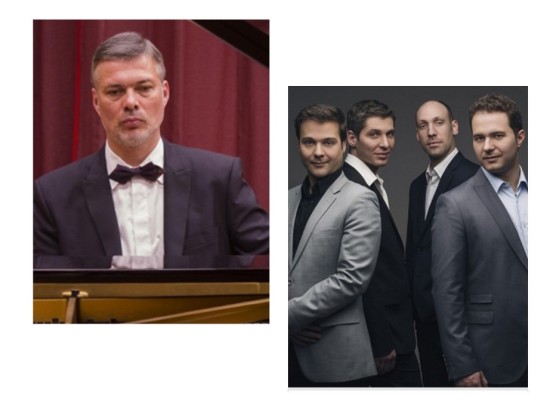
Accord Quartet

This joint concert by artists from from Transylvania and Budapest is framed by two works by Beethoven. The Op. 18 series of six string quartets was written when the composer was about 30, and he later dedicated them to Duke Lobkowitz. The F major quartet which opens the series is dedicated to Beethoven’s old friend Karl Ferdinand Amenda. The quartet has the traditional four movements, and according to Amenda the second, slow movement portrays the crypt scene from Romeo and Juliet. A few years later, in 1808, in Countess Mária Erdődy’s house in Vienna, Beethoven composed the D major trio for violin, cello, and piano. This work’s slow movement also became famous: its mysterious, suggestive atmosphere earned the piano trio the nickname ‘Ghost Trio’.

Between compositions by Beethoven, who kept in close contact with Hungarians, we hear one piece each by Liszt and Dohnányi, both committed performers and great admirers of the German master. Dohnányi composed four rhapsodies in 1903–04 and premiered them in Vienna. The second piece in F sharp minor evokes the mood of Liszt’s and Brahms’ rhapsodies. Liszt’s First Mephisto Waltz, with its recurrent devilish cackling and demonic effect, is one of his best known piano pieces, though it was originally written for orchestra: as the second movement of the symphonic work Two Episodes for Lenau’s Fast, written in 1860, it was entitled Dance in the Village Tavern. The Romanian composer George Enescu (1881–1955), was also greatly influential as a teacher. His violin and piano works are sadly rarely heard in Hungary, so for many the splendid Pavane and Bourrée from Suite No. 2, with their unusual slant on baroque dance movements, will be a new discovery for many listeners.

Boldizsár CSÍKY Jnr. 
pianist

Boldizsár Csíky Jnr.Boldizsár Csíky Jnr. was born in 1968 in Reghin (Szászrégen). He studied in the Lyceum of Arts, Tirgu Mures (Marosvásárhely), and then in the Gh. Dima Music Academy in Cluj-Napoca (Kolozsvár). As a college student studying piano, he won the nationwide prize five times, then in 1994 won the ‘Cella Delavrancea’ prize. He has taken part in masterclasses with Lev Naumov and Jenő Jandó. Between 1993 and 1997 he was a student of Walter Krafft’s masterclasses in Munich. In 1998 he attended a summer masterclass in Fontainebleau where his teachers to G. Cassadesus, Ph. Bianconi, and Ph. Entremont. In 2000, after performing in nearly 40 concerts each season there, the Munich Music Seminar appointed him permanent soloist. He has performed with all the symphony orchestras in Romania, and has made radio, television, and CD recordings. He is a member of several national and international juries, and has given many masterclasses at home and abroad. He has performed in over 800 concerts, in all the musical centres in Romania and also in Austria, Bulgaria, Czechia, England, France, Germany, Hungary, Italy, Japan, Moldova, Russia, Scotland, Switzerland, Ukraine, and the USA. Conductors with whom he has performed include: Erich Bergel, Ion Baciu, Emanoil Elenescu, Emil Simon, Petre Sbârcea, Lajos Bács, Ervin Aczél, Remus Georgescu, Cristian Mandeal, Horia Andreescu, Ilarion Ionescu-Galați, Sabin Păutza, Gheorghe Costin, Edward Tschivzel, Zoltán Kocsis and others. His chamber music partners include: István Ruha, Diana Ligeti, Gurban Carmen, Gaetano d’Espinosa, László Fenyő, Rolf Herbrechtmayer, Andreas Henkel, Valentin Arcu, Dan Grigore, Jenő Jandó, the Transsylvania String Quartet, the Gaudeamus String Quartet, the Moscow Trio, and others. In 2000 he gained a doctoral degree with his thesis on Scriabin’s piano music. He is currently a professor of the University of Music in Cluj-Napoca. Several of his pupils take part and win prizes in national and international competitions, and many of them have now become renowned in the concert hall or as teachers.


Accord Quartet

Accord - QuartettThe Accord Quartet was formed in 2001, by four students of the Franz Liszt Academy, Budapest.
Since then they have won several national and international prizes, including the 1st prize at the International Brahms Music Competition and the Junior Prima Prize. The Accord Quartet is now one of Hungary's most prominent chamber music ensembles.

Since 2012, the members of the Accord Quartet have taught at various universities and giving master classes in Hungary, Japan and the United States.

In addition to their concerts in Hungary, they have performed in almost every country in Europe, including prestigious concert halls such as the Brussels Museum of Fine Arts (BOZAR), the Madrid Museum of Fine Arts and the Hermitage in St Petersburg. In April 2008 they gave a concert in the presence of the Belgian Royal Family and the President of the Hungarian Republic.

Since 2005, the Hungarian State has supported the ensemble with two Italian master violins and an Italian master cello. Since February 2008, a Gasparo da Saló viola copy by Tamás Guminár has been contributing to the ensemble’s fine sound.


Page 3 of 3

  • Start
  • Prev
  • 1
  • 2
  • 3
  • Next
  • End
 

Sponsor:

emberi eroforrasok
 
kolozsvari magyar opera   MM Hotel Andrassy Budapest 1 papageno logo color RGB  radio
facebook 
 karpatfesztival@karpatfesztival.hu
 karpatfesztival.hu© Minden jog fenntartva
facebook 
 karpatfesztival@karpatfesztival.hu

  karpatfesztival.hu © All rights reserved

© 2026 karpatfesztival